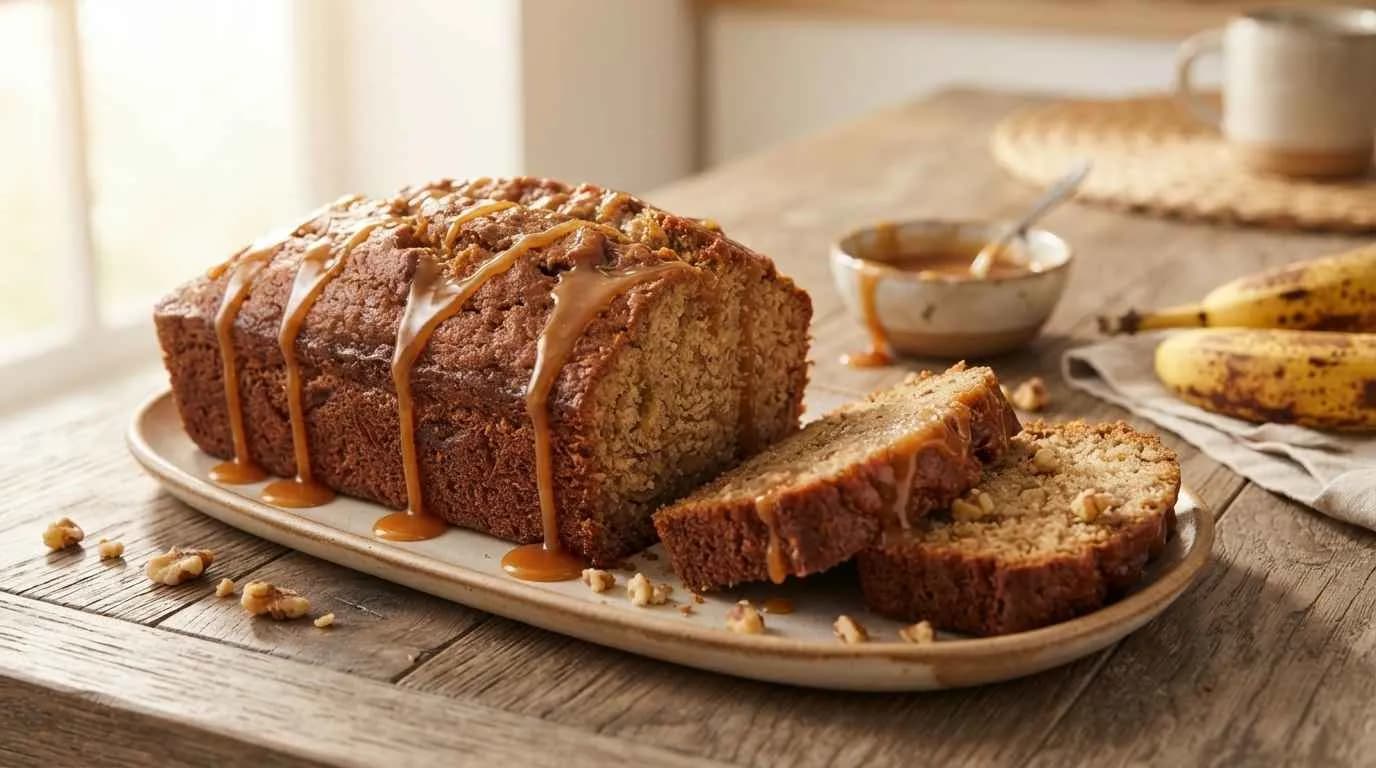
Banana bread doesn't need to be complicated to be genuinely great — the recipe below sticks to a short, familiar ingredient list and leans on a few technique details that make a bigger difference than people expect: how the butter and sugar are creamed, how ripe the bananas really are, and a simple stovetop caramel sauce that turns an everyday loaf into something worth making on a weekend morning.
Why This Recipe Uses Both Grams and Cups
Banana bread is forgiving compared to a lot of baking — but the two ingredients that genuinely shift the result are flour and mashed banana, since both can vary a surprising amount depending on how they're measured. A cup of flour scooped straight from the bag can weigh meaningfully more than one spooned in and leveled, and that extra flour is a common reason banana bread turns out denser or drier than intended. Weighing the key ingredients takes that variable out of the equation. For a deeper look at any specific ingredient here, our flour, butter, and brown sugar converters can help.
Ingredients
Makes 1 loaf.
| Ingredient | Grams | Cups / Volume |
|---|---|---|
| All-purpose flour | 240 g | 2 cups |
| Baking soda | — | 1 teaspoon |
| Salt | — | ¼ teaspoon |
| Ground cinnamon | — | ½ teaspoon |
| Unsalted butter, softened | 113 g | ½ cup |
| Brown sugar, packed | 165 g | ¾ cup |
| Large eggs | 2 | 2 |
| Ripe bananas, mashed | ~340 g | 1½ cups (about 3–4 bananas) |
| Buttermilk (or milk + 1 tbsp lemon juice) | ~80 g | ⅓ cup |
| Vanilla extract | — | 1 teaspoon |
| Optional: chopped pecans or walnuts | 90 g | ¾ cup |
| Optional: chocolate chips | 170 g | 1 cup |
No buttermilk on hand? Measure 1 tablespoon of lemon juice (or white vinegar) into a liquid measuring cup, then fill the rest of the way to the ⅓ cup line with regular milk. Stir and let it sit for about 5 minutes — it'll thicken slightly and may look a little curdled, which is exactly right. That acidity reacts with the baking soda to help the bread rise, in addition to standing in for the real thing.
Method
- 1Preheat the oven and prepare pan.Preheat the oven to 350°F (175°C). Position the rack in the lower third of the oven — this keeps the top of the loaf from browning too quickly before the center finishes baking. Grease a 9×5-inch loaf pan.
- 2Mash the bananas.The riper and spottier, the better — very ripe bananas are both sweeter and easier to mash smooth. A handheld or stand mixer on low-to-medium speed makes quick work of this if you don't want to do it by hand with a fork; just don't over-process it into pure liquid, since a few small banana pieces are fine.
- 3Whisk the dry ingredients.In a separate bowl, combine the flour, baking soda, salt, and cinnamon, and mix well until thoroughly blended. Set the mixture aside for now.
- 4Cream the butter and brown sugar.Beat the softened butter and brown sugar together until light and slightly fluffy, about 2 to 3 minutes. This step matters more than it looks — creaming properly incorporates air into the batter, which supports the bread's rise and texture. (There is no need to worry if a mixer is not available; this step can easily be completed with a little effort using a large whisk.)
- 5Add eggs.Add the eggs to the mixture one by one, beating well after each addition, until the mixture is completely uniform and smooth, and the eggs are no longer visible as separate entities.
- 6Mix in wet ingredients.Mix in the mashed banana, buttermilk, and vanilla on low speed until just combined.
- 7Combine dry and wet mixtures.Add the dry ingredients in two additions, alternating with the wet mixture, mixing on low just until no streaks of flour remain. Overmixing at this stage develops gluten and can leave the loaf tougher than it should be — stop as soon as it looks combined.
- 8Fold in mix-ins.Fold in nuts or chocolate chips, if using.
- 9Bake.Pour into the prepared pan, tap it gently on the counter a couple of times to settle the batter and release large air bubbles, and bake for 55 to 65 minutes. If the top is browning too fast partway through, loosely tent it with aluminum foil for the remainder of the bake.
- 10Test for doneness.To check if the cake is done, insert a toothpick into the center. If the toothpick comes out clean or with only a few slightly moist crumbs attached, the cake is ready; however, there should be no raw batter on it.
- 11Cool and release.Cool in the pan on a wire rack for about 20 to 25 minutes before turning the loaf out. Running a butter knife around the edge first, then inverting the pan onto a clean towel, helps release it cleanly. Let it cool further before slicing.
The Caramel Drizzle (Optional, But Worth It)
A simple pan caramel takes this from good banana bread to something a little more special, and it's genuinely simple to make:
| Ingredient | Amount |
|---|---|
| Unsalted butter | 57 g (4 tablespoons) |
| Brown sugar, packed | 110 g (½ cup) |
| Milk | 60 g (¼ cup) |
| Vanilla extract | 1 teaspoon |
Melt the butter in a small saucepan over low heat. Once melted, stir in the brown sugar and let it dissolve into the butter—you will notice the color deepening as it comes together. Pour in the milk, stirring constantly, and let the mixture bubble gently for a minute or two until it thickens slightly and takes on a caramel hue. Remove from the heat and stir in the vanilla. The sauce will continue to thicken a bit as it cools, so remove it from the heat just before it looks fully set. Drizzle it warm over the sliced banana bread.
Why the Technique Details Matter
- Very ripe bananas aren't just sweeter — their starches have converted further into sugar, which also means more moisture is available to the batter, directly affecting how moist the finished loaf turns out.
- Buttermilk (or the lemon juice substitute) adds acidity that reacts with the baking soda, contributing to rise, and adds tang that balances the sweetness of the bananas and brown sugar.
- Brown sugar over white brings extra moisture from its molasses content, along with a deeper, slightly caramelized flavor — the same reason it's favored in chewy cookies.
Troubleshooting
Bread sinks in the middle or turns out gummy. This is almost always too much banana or underbaking — if your bananas are unusually large, you may be adding more mashed banana by volume than the recipe accounts for. Weighing the mashed banana (around 340g) rather than estimating by cup is the most reliable fix.
Top is browning too fast but the center isn't done. Tent the loaf loosely with foil partway through baking, and double-check your oven rack is in the lower third position.
Bread is dry. Likely too much flour (a strong argument for weighing it) or slightly overbaked — pull it as soon as a toothpick shows a few moist crumbs rather than waiting for it to come out completely clean.
Storage and Freezing
Store the cooled loaf wrapped tightly at room temperature for up to 3 days, or in the refrigerator for up to a week. To freeze, wrap the cooled loaf (whole or in individual slices) in two to three layers of plastic wrap or foil, place in a freezer bag, and freeze for up to 3 to 4 months. Slices thaw faster than a whole loaf if you want to pull out just what you need. Thawing works fine either at room temperature or in the refrigerator.
Quick Reference
The Bottom Line
Good banana bread comes down to ripe bananas, a properly creamed butter-and-sugar base, and not overmixing once the flour goes in — the same handful of details that separate a decent loaf from a genuinely great one. Weighing the flour and banana specifically removes the two biggest sources of variation, and the caramel drizzle, while optional, is a small enough extra step to make the loaf feel like a weekend occasion rather than just a way to use up spotty bananas.
In the mood for another cozy bake? Try our Chewy Oatmeal Cookies recipe for crisp edges and soft, oat-filled centers.
Explore More Baking & Conversion Resources